research as a hobby
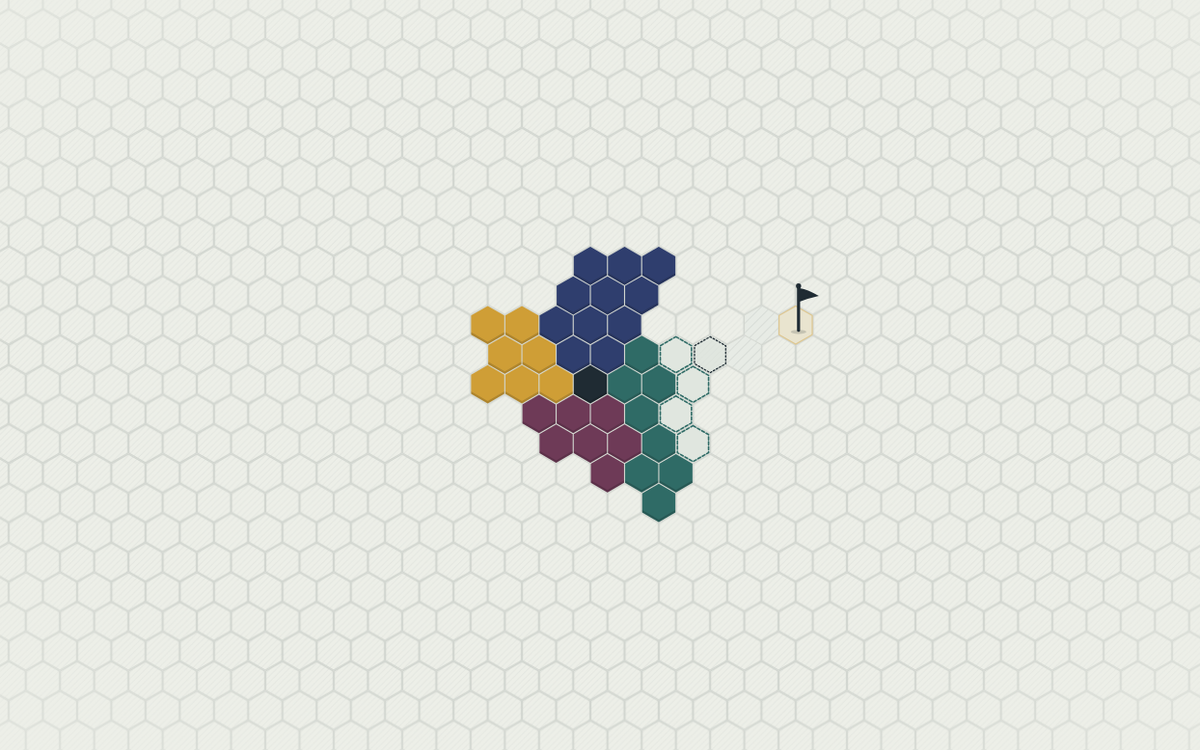
My whole life fits on a small board of hexes. Family, school, work, hobbies. Everything around my board is fog, and the more I learn and experience, the more fog I want to explore during my life.
I found this idea through Jake Van Clief, who mapped his interests/fixations onto one of my favorite games growing up, Civilization. I wanted to do his exercise myself and show the way I use AI "scouts" to learn new things and expand my own Civ board.
The Civ map
I grew up on turn-based strategy games like Civilization. You start with a small patch of land you can see (drawn as hexagons). Everything around it is covered in a "fog of war." You send scouts out to places of interest to uncover what plots are in the fog.
There are two kinds of fog:
1. Land you have never seen
2. Land you saw once but moved on from: It goes back to being fog without you near it. In Civ you can still see the terrain you uncovered (you just stop seeing what's changing there)

In the fog there are resources, other civilizations, and trinkets you want. As your base grows, you settle new land and your vision of the map grows with it. Even after you settle a plot, you keep maintaining and cultivating it, and your past settlements shape the decisions you make next.
A game of Civ resembles my own life and my love of research. I started with a beginner base, and as I grew up I expanded into the fog by settling plots that define me today. Some plots have no relation to each other. Still, each new thing I learned has influenced other parts of my life in some ways.

Sending scouts
My photography plot has been part of my life for a long time, but I let it go foggy in recent years. It wasn't until my trip to Japan that I picked it back up and relearned my Fujifilm camera for the journey.
Years ago, relearning a hobby meant a ton of Google searching. Endless clicking through articles, trying to filter paid ads from content I could actually trust.
AI is one of the fastest scouts we can use, but we have to do so responsibly. I built research "skills" in Claude that bring back resources, books, exercises, and personalized content. My skills have a bias toward masters of the craft, ideas to learn with other people, and small steps I can take that week.
Responsible research AI use: Everything AI gives me links directly to sources, which I review. Any content I take forward into my learning gets a quality check again for accuracy. If any content does not pass the checks or does not have a clean source - it gets cut.
A lot of my learning is done in the world. AI is truly just a "scout" for me to get started on how to settle a new plot and enable my learning.

Here is a snippet of my Claude research chat with book recommendations I purchased:

Cultivating scouts
Here's what I'd tell anyone targeting a new plot with their scout:
1. Think about your best scout for learning: what my AI brings back is shaped by a Claude "skill" I made (skills are a series of simple instructions used by your AI - there's a starter prompt at the end of this article if you want to try).
My personal research skill has explicit instructions to bring me physical books I can purchase written by masters to help with my learning and things I can do in life to learn about a plot.
2. Keep your expansion simple: Do not try to research 10+ plots at once (intention goes a LONG way here - doubly so if you add deadlines). My hard rule is cultivating 2-3 new plots at most, outside the habits for plots I've already settled.
Having a project graveyard due to stretching yourself too thin is not productive for learning. Really take a new learning to the edge before starting a new one.
3. Let plots go back to fog: Things you once loved will turn foggy and that is OK. Those experiences still influence you in more ways than you know. For example, I used to paint and do color mixing for my Warhammer 40k mini figures all the time, but I have not painted in a while.
Regardless, the learnings from that plot are still a core part of my life. They show up when I am choosing colors for things at work/home, making what I am creating more intentional.
Eureka!!
Civ VI has a mechanic called a Eureka. Do something related out in the world and your research jumps ahead. Meet another civilization, for example, and you get a boost toward a particular technology (Writing, for example).

Research is better when I can apply it with people. Ideas for doing things with others are a core instruction in my research skills. When I was researching photography, one suggestion was to take portraits of my friends and family. Learning gets more fun with people around me (and they get great memories out of it).
I also got constant feedback on my photos, and it prepared me for my trip to Japan:


The map never ends
When I zoom all the way out, it's amazing how small my board is. It brings to mind something Anthony Bourdain said on No Reservations:
"It seems that the more places I see and experience, the bigger I realize the world to be. The more I become aware of, the more I realize how relatively little I know of it, how many places I have still to go, how much more there is to learn. Maybe that's enlightenment enough - to know that there is no final resting place of the mind, no moment of smug clarity. Perhaps wisdom, at least for me, means realizing how small I am, and unwise, and how far I have yet to go."
Pick one new plot this week to explore. Send your scout out, then go discover it yourself.
DM me what you learned! I'm always looking to connect with more Civs.

P.S. Want to try your own AI scout? Here's a starter prompt! Fill in the brackets, paste it into chat (turn on deep research or web search if you have it):
“I want to explore a new topic in depth: [what you want to learn]. My level: [never tried / rusty]. Time I can spend learning: [minutes or hours per week].
Act as my scout and bring back:
- 2-3 books by masters of the craft, with one line on why each
- A few free, reputable resources on the subject, and who made each one
- One small step I can take this week to learn
- One way to learn it with other people, or a place near [city] where I can talk with people about it
Link every source. Skip paid ads and sponsored lists. Keep it short and clean. Before you answer, check your work: cut anything you can’t back with a source, and tell me when you’re unsure.”
--
Andrew’s career spans commercial banking, data science, and creative design, and today centers on helping enterprises adopt AI at scale. At OnTrac AI, he is a Senior Manager on Ignite, the firm’s AI advisory and roadmap program for enterprise clients. He holds an MBA from the University of Notre Dame and a bachelor’s degree in Economics from the University of Michigan.
If someone is trying to get more out of their computer, you’ll usually find Andrew right there helping them.